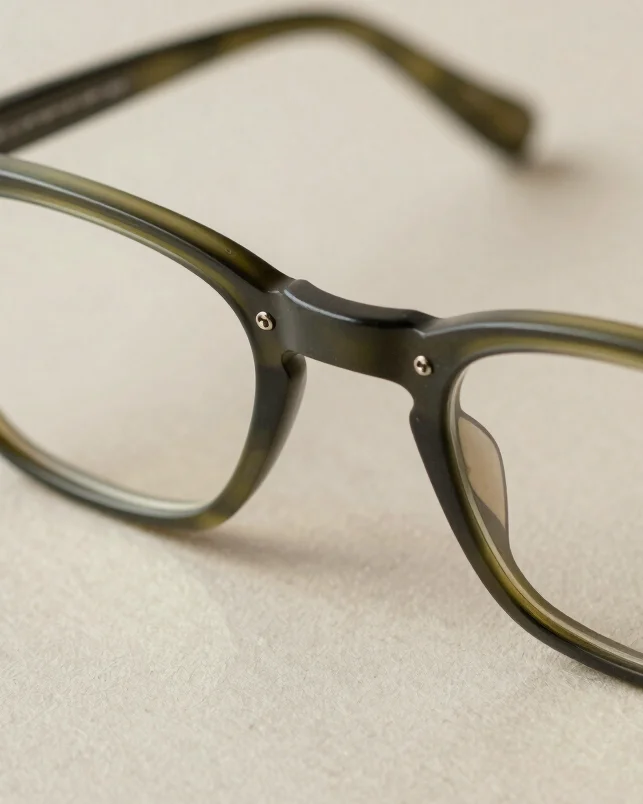
Materials and manufacturing
How wood, bamboo, acetate, and metal frames really behave
An independent look at how each substrate is made, how it ages, and what it can and cannot promise over the life of a frame.
Four substrates
Four materials, four different behaviors
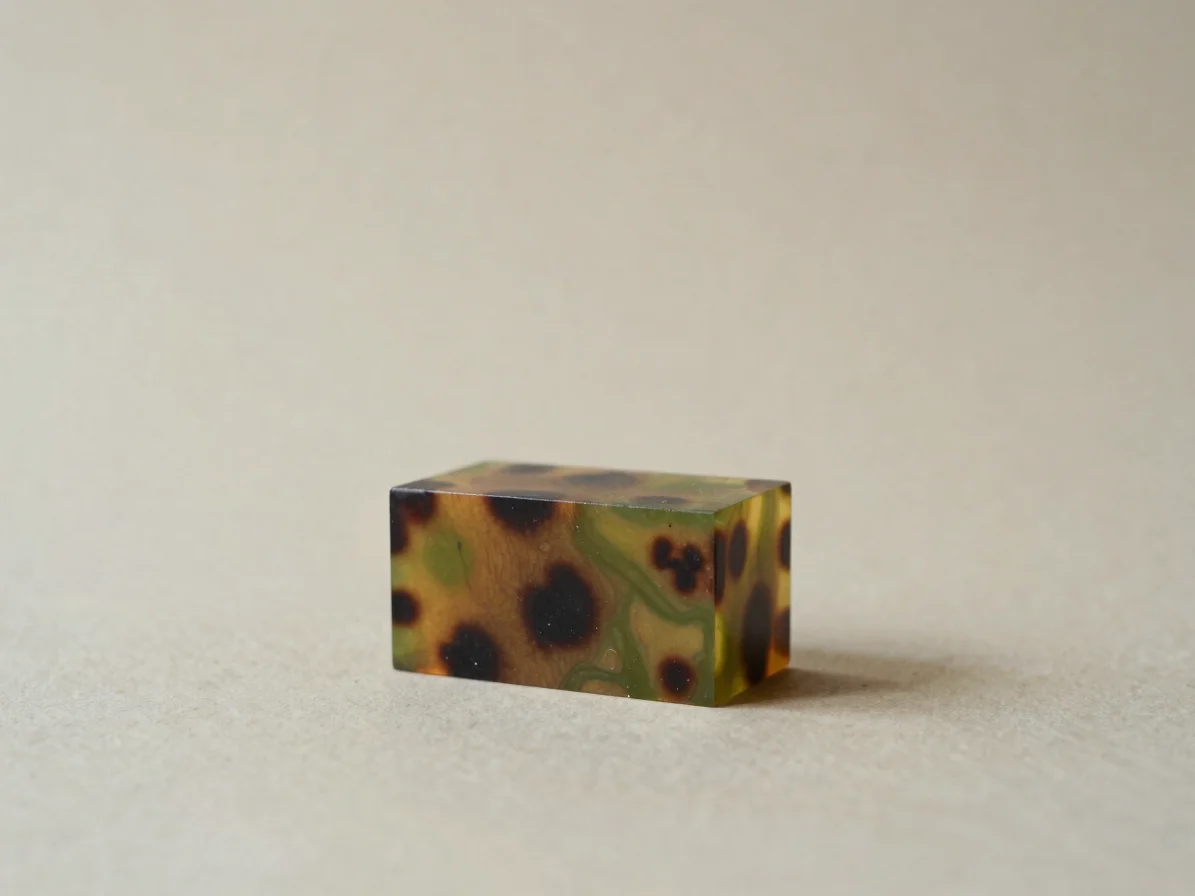
Cellulose acetate
Repeated thermo-adjustment
Acetate is a plant-derived plastic that can be warmed and reshaped several times, which lets an optician fine-tune fit. Its color runs through the full thickness, so surface scratches show less than in painted metal. It is sensitive to strong solvents and prolonged heat in a parked car.
Natural wood
Laminated cross-grain for stability
Solid wood moves with humidity and can split along its grain. Manufacturers therefore laminate thin veneers with alternating grain direction, which stabilizes the front and temples. Wood frames are rarely fully natural in construction; the finish, adhesive, and hinge hardware all matter for durability.


Bamboo
Strength with a humidity limit
Bamboo has a high strength-to-weight ratio and a distinctive fibrous grain. Its long fibers can develop stress along their length when moisture changes quickly, so bamboo frames benefit from careful storage away from heat and dampness. Documented lifespan depends on the specific laminate and finish.
Metals
Titanium and stainless steel
Titanium and surgical stainless steel resist corrosion well and keep hinge elasticity over time, which makes them strong choices for thin, lightweight frames. Zinc alloys are less corrosion resistant and can become brittle with repeated stress. Plating quality varies, so the base metal is worth checking.
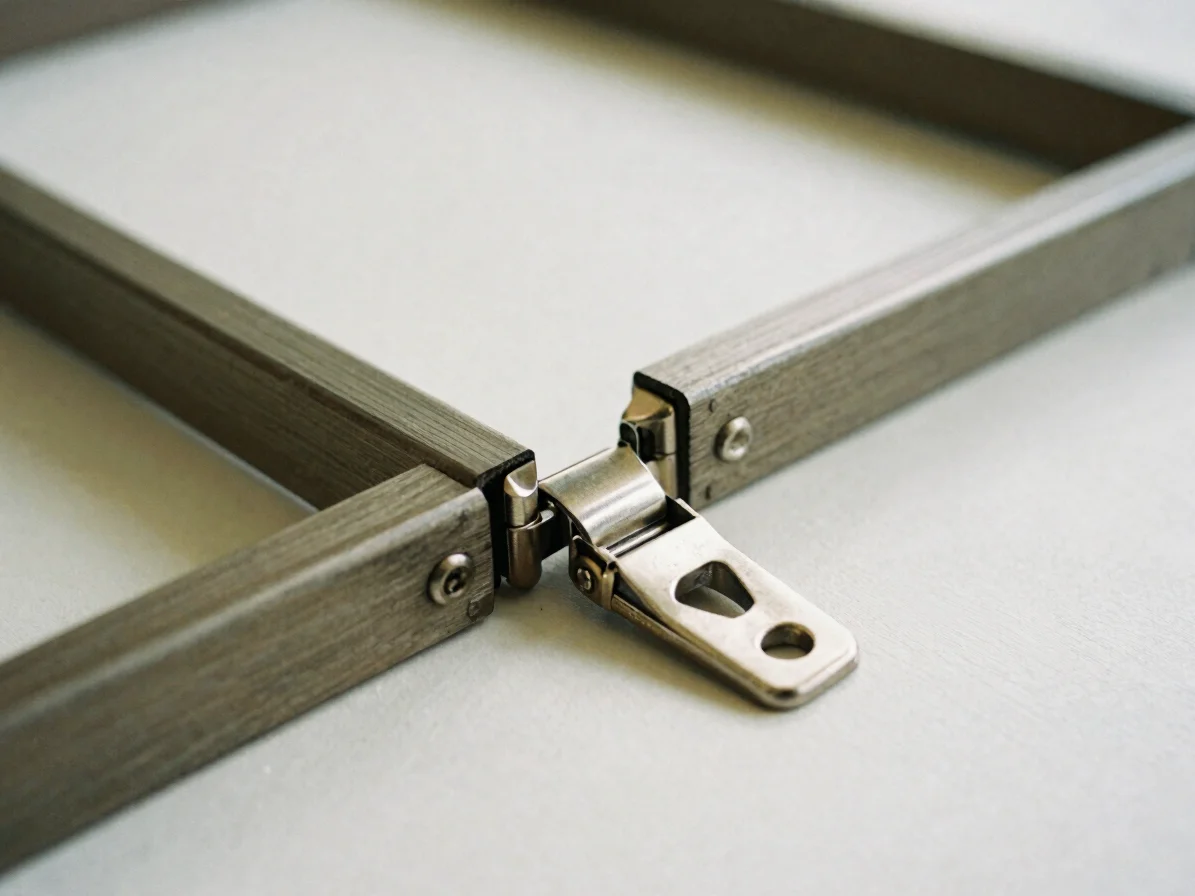
Repairability
Hinges, rivets, and heat-set hardware
Barrel hinges, rivet mountings, and heat-set metal inserts decide how long a frame can be adjusted and repaired. A barrel hinge held by a screw can be tightened or replaced, while a rivet that loosens often means the front has to be reworked. Heat-set inserts in acetate and wood hold better when the hole is sized correctly and the material is not overheated during installation.
When comparing frames, look at how the hardware is attached and whether replacement screws or hinges are documented for that model. These details tell you more about long-term use than any surface finish.